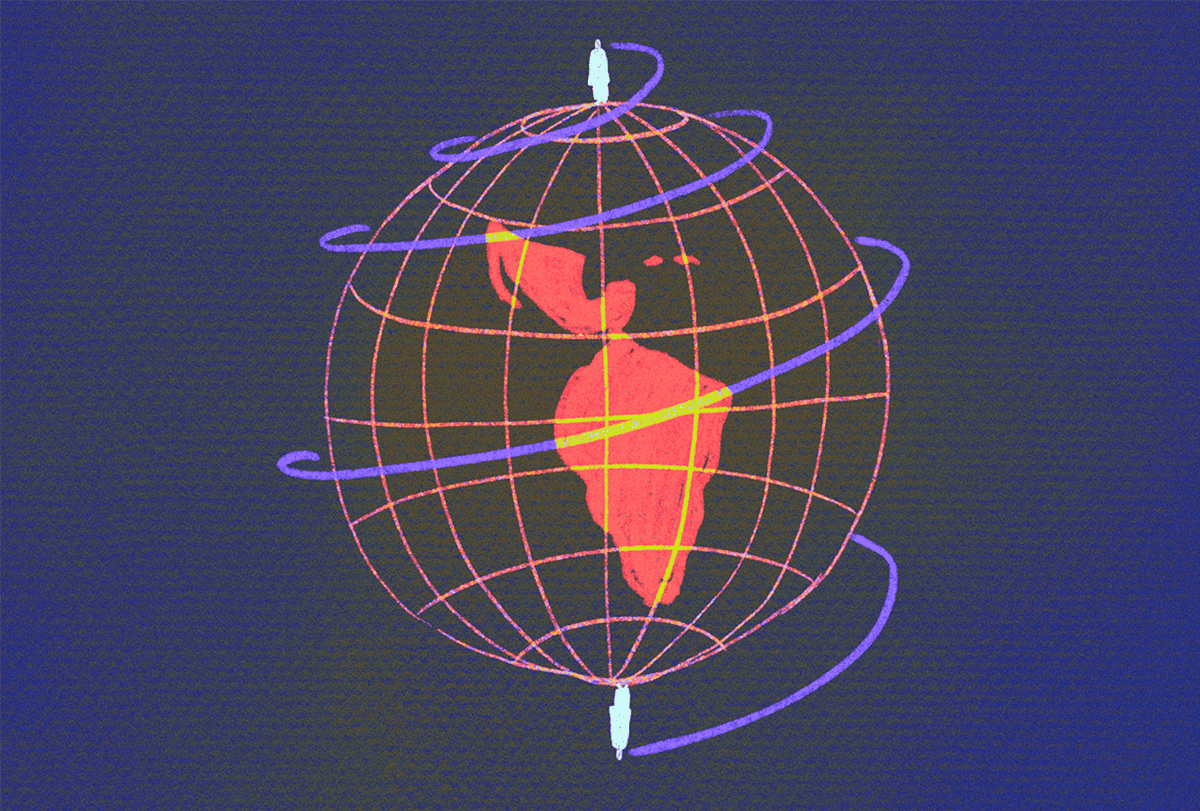
Ahead of the IV FALAN Congress in Neuroscience in Santiago, Chile, The Transmitter has published a special article by Francesco Mattia Rossi, President of the FALAN Executive Committee, reflecting on the Federation’s role in strengthening neuroscience across Latin America and the Caribbean.
Published as part of The Transmitter’s special report “The State of Neuroscience in Latin America,” the article, “How FALAN is building a thriving neuroscience community in Latin America,” explores FALAN’s efforts to foster regional collaboration, expand training opportunities and build stronger connections among neuroscientists and scientific societies.
Under the guiding principle “Unity Is Strength,” Rossi highlights the importance of regional cooperation in addressing shared challenges such as limited research funding, infrastructure constraints and insufficient opportunities for scientific training and capacity building.
The article also looks at the role of the IV FALAN Congress, which will bring together more than 1,000 participants in Santiago, as a major platform for connecting researchers from across Latin America and the Caribbean, sharing expertise and resources, and creating new opportunities for collaboration.
Investing in the next generation
A central focus of the article is FALAN’s commitment to neuroscience education and training.
Rossi discusses the launch of the Latin American Training Program in Neuroscience (LATP), developed in close collaboration with IBRO’s Latin American Regional Committee. Its first edition has supported 27 students from across the region, providing intensive theoretical and hands-on training in modern neuroscience methodologies, including electrophysiology, computational neuroscience, intravital microscopy and neurotranscriptomics.
The initiative is part of FALAN’s broader goal of establishing a sustainable regional training program capable of providing high-quality opportunities for young scientists throughout Latin America and the Caribbean.
The article also highlights FALAN’s growing collaboration with regional and international organizations and its commitment to diversity, equity, scientific networking and the development of initiatives that reflect the unique research priorities of the region.
As Rossi writes, FALAN envisions a future in which researchers, clinicians, trainees and scientific societies are increasingly connected, sharing knowledge, expertise and opportunities across national borders.
We invite the FALAN community to read the full article and learn more about the Federation’s vision for the future of neuroscience in Latin America and the Caribbean.
Read “How FALAN is building a thriving neuroscience community in Latin America”